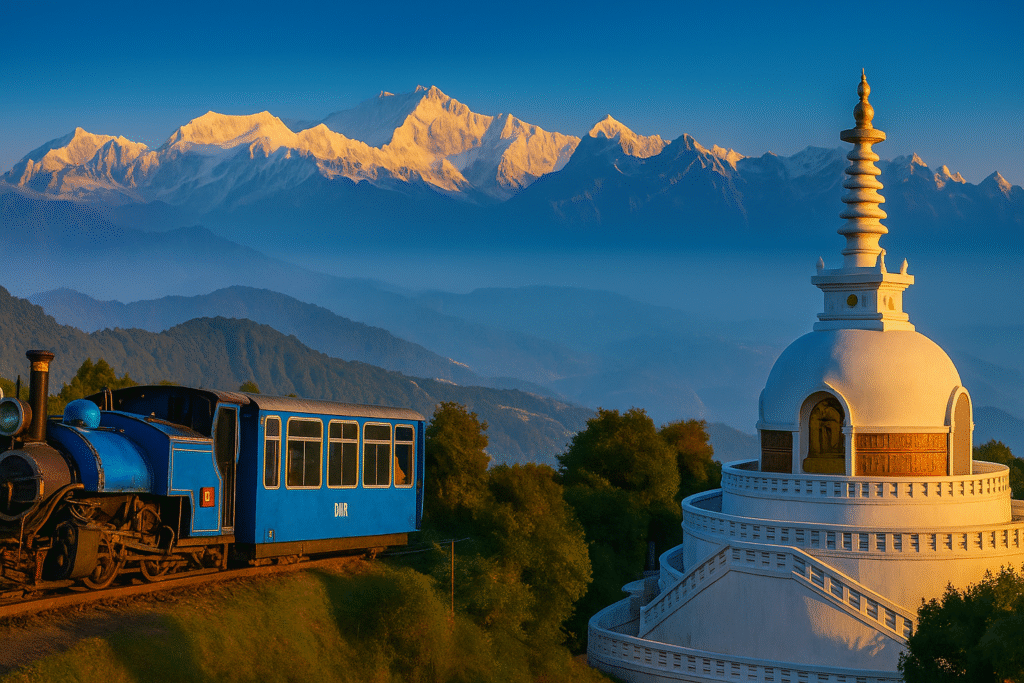
Darjeeling, the “Queen of the Hills” is perched at around 2,050 meters above sea level in the Eastern Himalayas of India. Famed for its stunning vistas, world‑renowned gardens, and rich cultural tapestry, Darjeeling attracts travelers from all over the globe. A perfect blend of natural beauty, colonial charm, and vibrant traditions, a Darjeeling tour promises experiences ranging from sipping the authentic Darjeeling tea to watching a Himalayan sunrise from Tiger Hill. In this comprehensive blog, you’ll uncover top‑notch places to visit in Darjeeling, local secrets, travel tips, and sustainable travel ideas.
1. Tiger Hill: Witness the Dawn of the Himalayas
Nothing beats the breathtaking sight of sunrise from Tiger Hill, which sits at an elevation of about 2,590 meters. On a clear morning, you get a majestic panoramic view, including Mount Everest (29,032 ft) and Kanchenjunga (28,169 ft), the world’s third‐highest peak. Visitors typically arrive at the hilltop between 4:00 AM and 5:00 AM to catch the first rays illuminating the Himalayan peaks.
Travel tip: Bring warm clothing (it can be near freezing), and hire a local guide to explain the Himalayan geology and weather patterns.
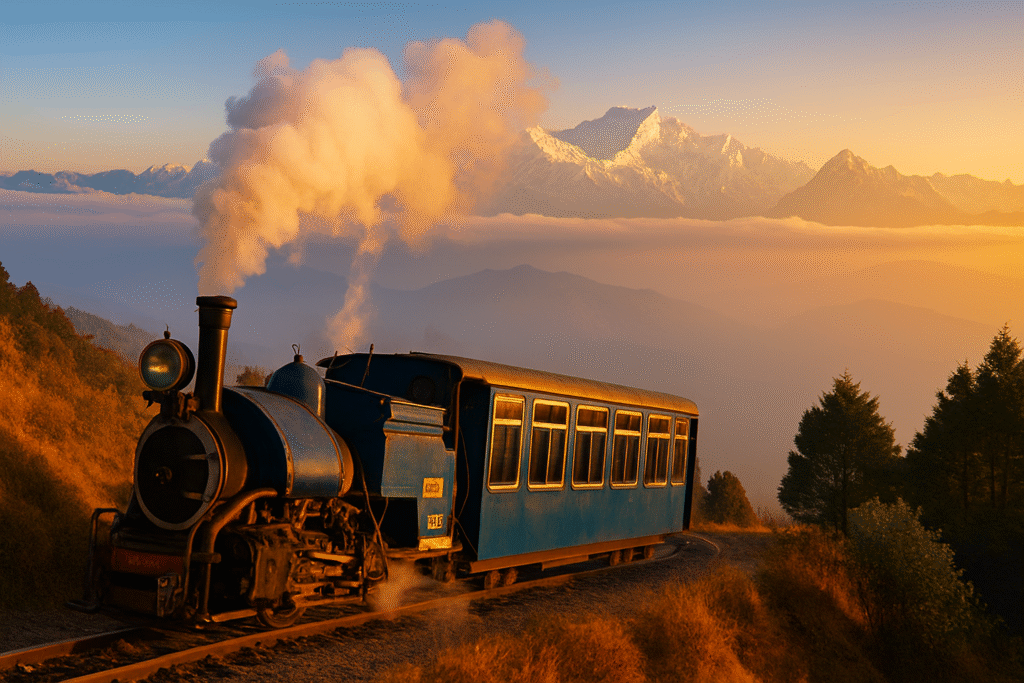
2. Darjeeling Himalayan Railway: A UNESCO Heritage Ride
Often called the “Toy Train,” the Darjeeling Himalayan Railway (DHR) dates back to 1881. This narrow‑gauge marvel winds through breathtaking landscapes and switches back on steep slopes. The steam engine journey between Darjeeling and Ghum (India’s highest railway station at about 7,407 ft) spans roughly 15 km and features iconic stops like the Batasia Loop—a spiral track offering panoramic mountain views complemented by a war memorial.
Local secret: Opt for the “Red Panda” toy train which runs on diesel; many true steam train purists believe it’s the most authentic experience today.
3. Batasia Loop and War Memorial
An engineering marvel, Batasia Loop lies about 5 km below Darjeeling. The train performs a full circle here to overcome the steep incline, offering a 360° vista of the Himalayan range. Adjacent is the Gorkha War Memorial, a solemn tribute honoring Gorkha soldiers who sacrificed their lives in various military missions around the world.
4. Padmaja Naidu Himalayan Zoological Park
Inaugurated in 1958, this zoo operates as a conservation center for rare Himalayan fauna, focusing on snow leopards, red pandas, Himalayan wolves, and Tibetan mastiffs. The zoo’s naturalistic enclosures reflect the mountain habitats of these animals, making it both educational and conservation‑oriented.
5. Himalayan Mountaineering Institute (HMI)
Founded by mountaineering legend Tenzing Norgay in 1954, the HMI is perched adjacent to the zoo. It houses a mountaineering museum displaying historic artifacts such as gear from Everest expeditions. Beginners and experienced climbers alike can attend short training courses on rock climbing and rope techniques.
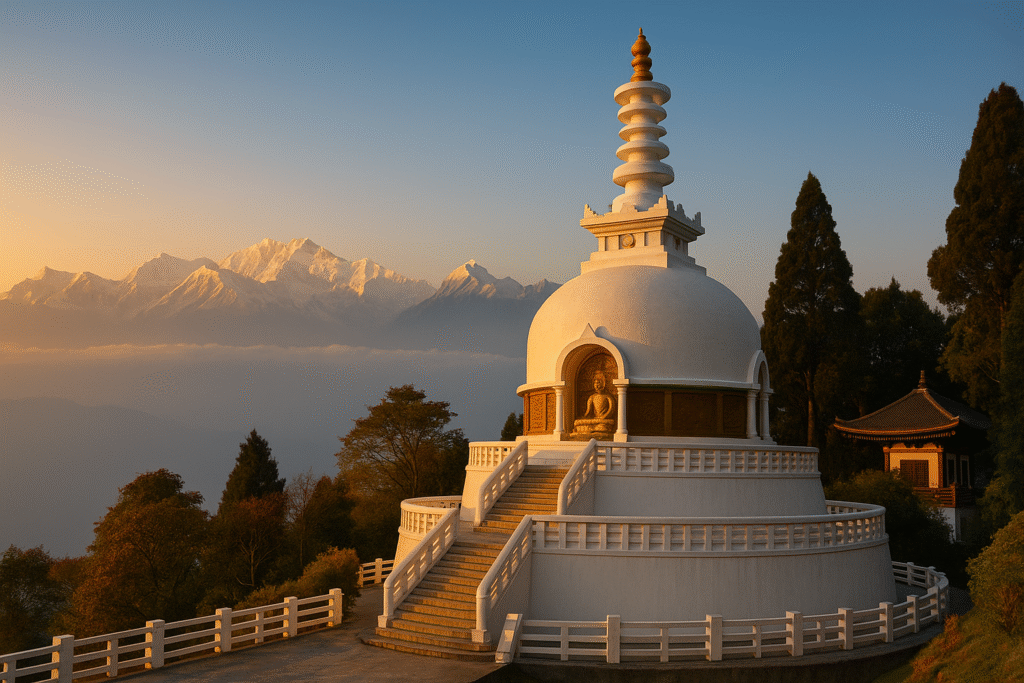
6. Peace Pagoda (Japanese Temple)
Nestled atop the Japanese Temple Hill, the Peace Pagoda is a stunning white-domed structure overlooking Darjeeling. Belonging to the Nipponzan Myohoji Buddhist sect, it hosts four bronze statues of Buddha in different poses, each symbolizing aspects like peace and meditation. Ideal for witnessing serene sunset views and enjoying the temple’s tranquil ambiance.
7. Observatory Hill & Mahakal Temple
Of sacred significance to both Hindus and Buddhists, Observatory Hill houses the Mahakal Temple (a Shiva shrine), along with Buddhist prayer flags and stupas. Climbing its slopes offers sweeping views of Darjeeling town and lush tea estates. The dense, old‑growth forest around the hill fosters a sense of sanctuary.
8. Tea Estates and Tea Gardens
Darjeeling is synonymous worldwide with its exquisite tea: light, floral, and aromatic. Numerous tea estates—Happy Valley, Gielle, and Margaret’s Hope—offer guided tours where visitors can walk through manicured rows, participate in tea plucking, watch processing demonstrations, and enjoy tea tasting sessions.
Fun fact: Darjeeling tea is a “geographical indication” product—only tea grown in Darjeeling can officially be called Darjeeling Tea.
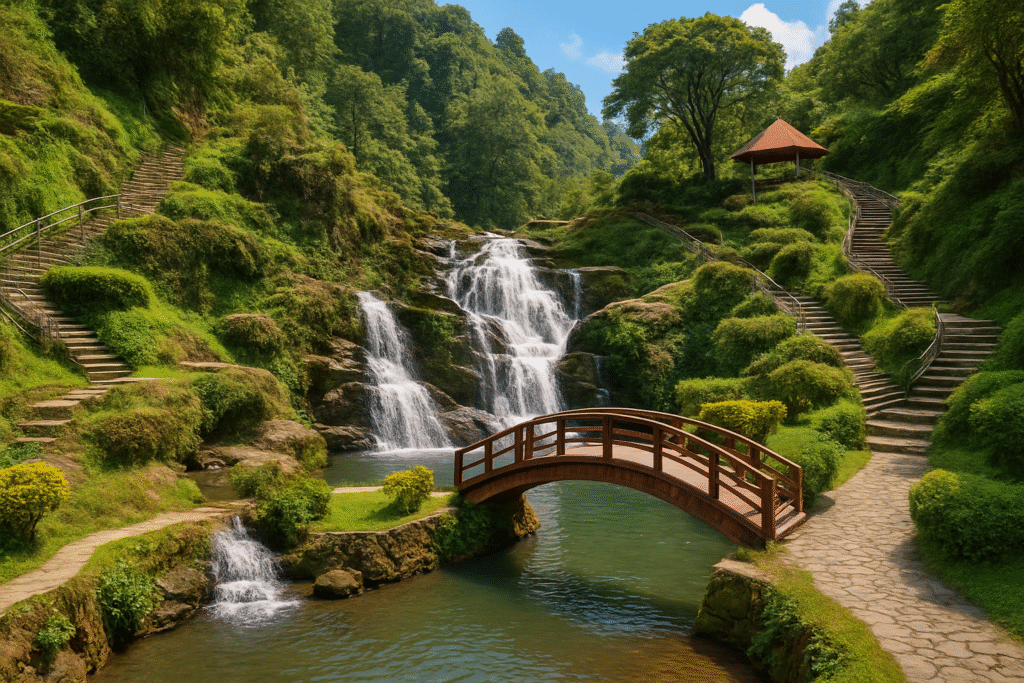
9. Rock Garden & Ganga Maya Park
A scenic setting with cascading waterfalls, lush green lawns, and landscaped gardens, the Rock Garden is great for a family day out. Nearby Ganga Maya Park features wooden footbridges, fish‑filled ponds, and water rides—adding recreational fun to the natural charm.
10. Mall Road & Chowrasta Square
Darjeeling’s heart—the Mall Road—is a pedestrian promenade encircled by colonial buildings, shops, bakeries, and cafes. A visit here is a multi‑taste experience: from local street snacks like momos and thukpa to continental cheese straws and pastries. Chowrasta square is the social hub where you’ll find street performers, local artists, and scenic benches overlooking mountains.
Other Must‑Explore Spots
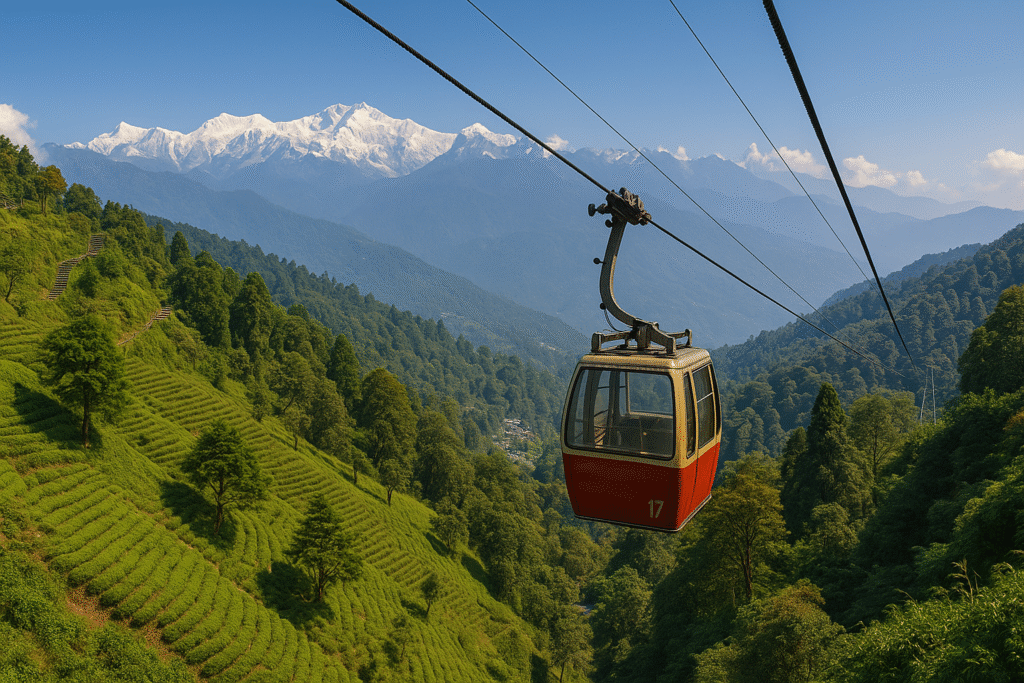
1. Darjeeling Ropeway
Connecting Singamari and Jalapahar, this 2.8 km ropeway offers a bird’s‑eye view of tea gardens, rivers, and the rolling terrain.
2. Observatory Hill Tibetan Refugee Market
A treasure trove of handicrafts—thangkas, prayer flags, handmade shawls, antique jewelry and souvenirs, all goldmine for cultural collectors.
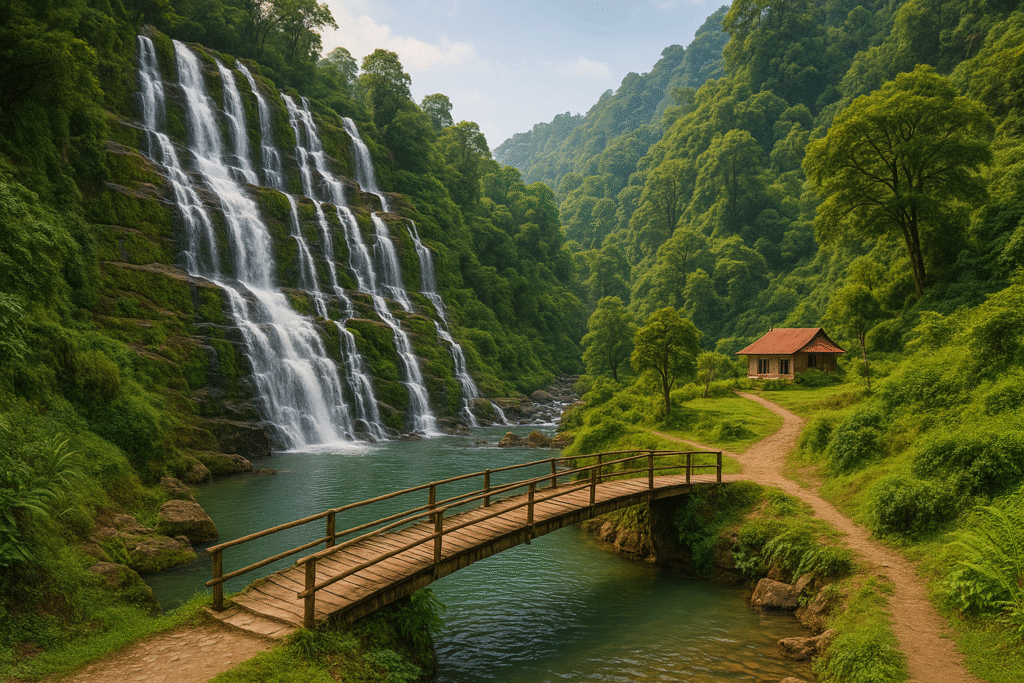
3. Seven Sister Falls & Lolegaon
Within a 30‑45 minute drive, these cascading falls (approx. 900 ft) and the peaceful Himalayan hamlet of Lolegaon make ideal off‑the‑beaten‑track destinations.
4. Japanese Peace Bell
From the Peace Pagoda’s center, striking the prayer bell three times is believed to cleanse the mind and seek inner peace.
Seasonal Highlights & Best Time to Visit
-
March–May: Spring blossoms—rhododendrons, orchids—ideal for trekking and tea estate visits.
-
June–September: Monsoons bring dramatic waterfalls and emerald green hills, but landslides are a hazard.
-
October–Mid‑December: Autumn clarity offers crisp mountain views and ideal conditions for sunrise outings and ropeway rides.
-
January–February: Snow dusts the hills; sunrises at Tiger Hill are chilly but unforgettable.
Travel & Accommodation Tips
-
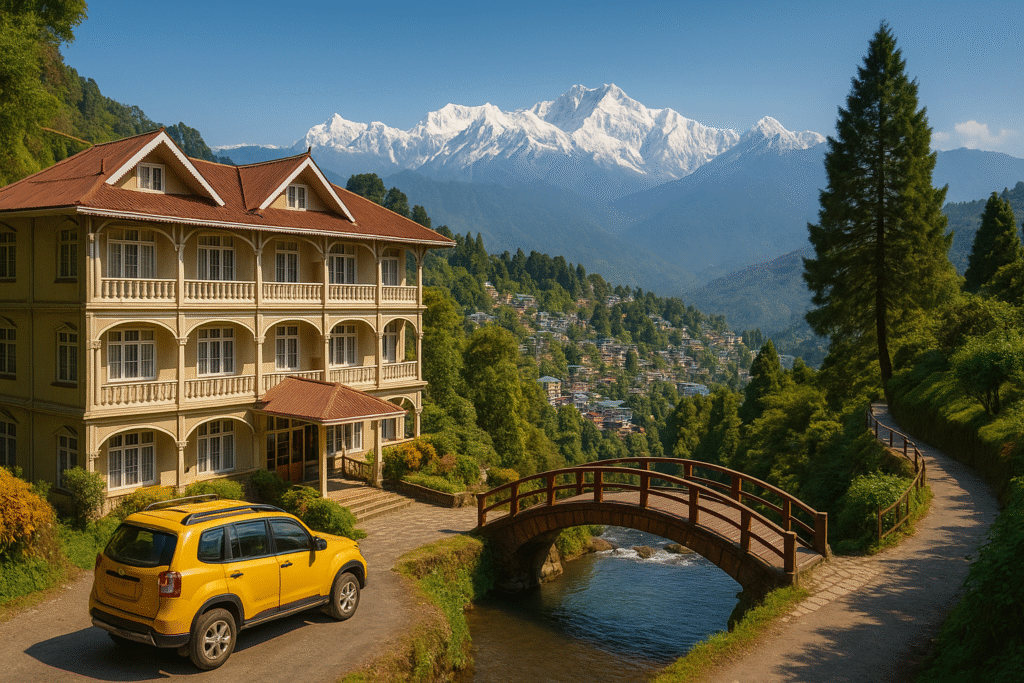
Stay: Boutique mountain lodges or heritage hotels with clear mountain views; options range from mid‑budget to luxury.
-
Transport: Hire a local shared cab or jeep; minibuses cover key routes. Always pre‑book for day trips.
-
Altitude: Mild headaches are common; acclimatize with light activity and stay hydrated.
-
Permits: Indian nationals require no permit. Foreign travelers may need Inner Line Permits when traveling farther toward Sikkim/Bhutan.
-
Packing: Include waterproof jackets, warm layers, sunglasses, sunscreen, comfortable shoes, and reusable water bottles.
Responsible & Sustainable Travel
-
Support local homestays and small cafés.
-
Reduce plastic waste—carry reusable bags, water bottles, and avoid single‑use plastics.
-
Respect wildlife—don’t feed zoo animals or stray pets; follow park guidelines.
-
Conserve water in your guesthouse.
Why Darjeeling is Famous
-
Darjeeling Tea: Known as the “Champagne of teas,” its distinct aroma and flavor derive from the region’s rich Himalayan soil and altitude.
-
Toy Train: A historical feat from the colonial era, it ranks as a UNESCO World Heritage railway.
-
Scenic Beauty: Tiered tea gardens, dense forests, plunging waterfalls, and majestic snow‑capped peaks.
-
Mountain Culture: A vibrant ethnic mix—Nepali, Bhutia, Lepcha, Tibetan—culminating in a rich tapestry of food, music, and festivals.
-
Spiritual Vibe: Numerous Buddhist monasteries, Hindu temples, and meditative spots across hilltops.